Executives Are Changing How They Consume Market Research
Feb 2, 2026
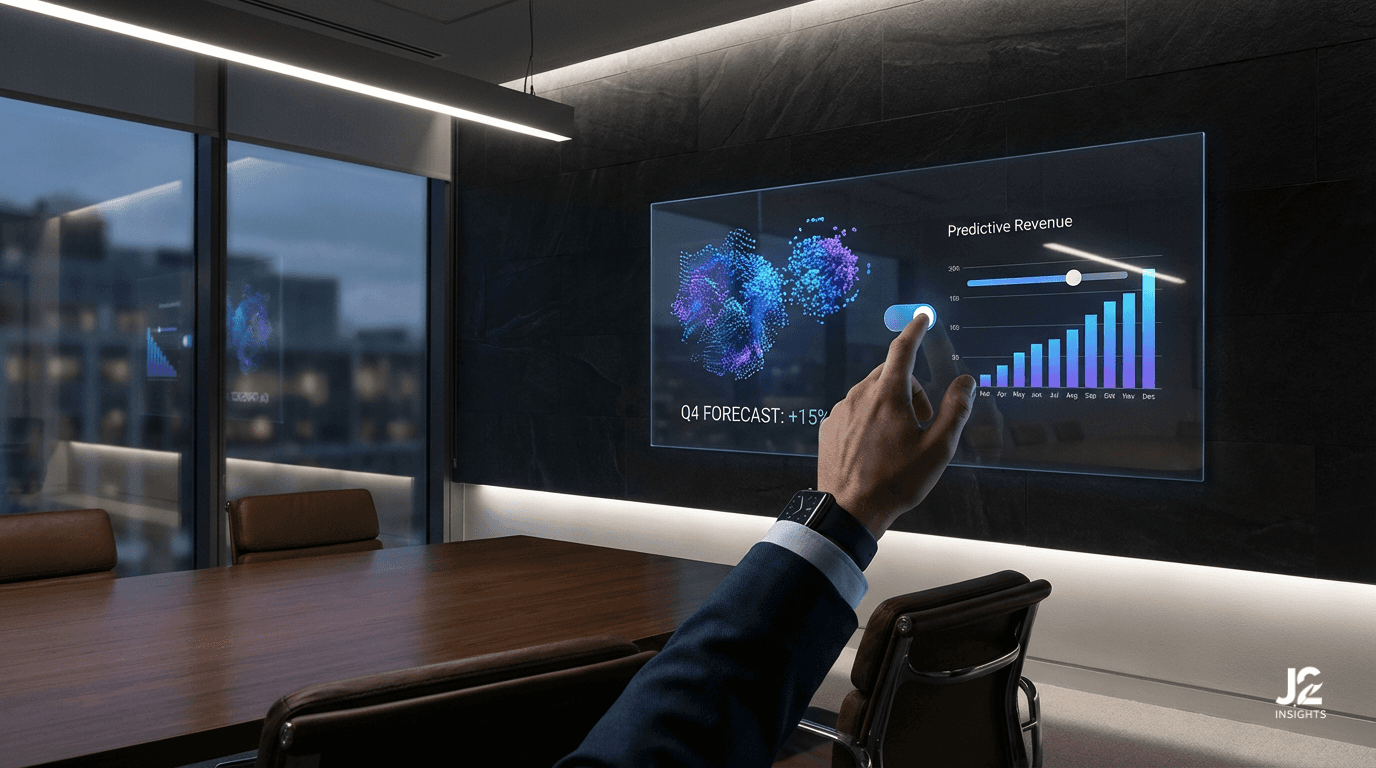
From Slide Decks to Live Decision Inputs
The format of market research is undergoing a quiet but radical transformation. This shift isn't being driven by aesthetic trends or the desire for better graphic design; it is being driven by a fundamental change in executive behavior.
For decades, the "Deck"—a 60-slide PowerPoint presentation—was the gold standard of insight delivery. It was a linear narrative that required the executive to sit, listen, and interpret. But in the 2026 corporate environment, senior leaders no longer have the luxury of passive consumption. They operate in compressed decision windows where the gap between receiving information and pulling a commercial lever has shrunk from weeks to hours.
The "Deck" is a static artifact in a dynamic world. Today’s leaders don’t want to interpret findings; they want to interact with them.
The Rise of the "Decision Tool"
According to the Harvard Business Review (2024), executives are significantly more likely to act on insights when they are presented as simulations, scenarios, or dynamic dashboards rather than static reports. This isn't just a preference for "cool visuals"—it’s a preference for utility.
AI is the engine enabling this shift. By processing massive datasets in the background, AI allows research teams to turn their traditional outputs into "Live Decision Inputs." We are moving from "What happened?" to "What if?"
When research is delivered as a tool rather than a document, it takes several new forms:
Interactive Scenario Models: Instead of showing a bar chart of potential growth, researchers provide a model where an executive can toggle variables—like competitor pricing or supply chain delays—to see the projected outcome in real-time.
Sensitivity Analyses: AI-backed tools that show exactly how "sensitive" a strategy is to external shocks, identifying the "breaking point" of a commercial plan.
Live Signal Monitors: Dashboards that don't just show historical sentiment but flag "anomalies" as they happen, allowing for immediate course correction.
From "What Did It Say?" to "What Happens If?"
The shift in consumption changes the very nature of the executive-researcher relationship. In the old model, the executive asked: “What did the research say?” The researcher would then point to a specific slide.
In the new model, the executive asks: “What happens if we change the bundle price by 10% in the European market?”
Research teams that can answer that question mid-meeting—by adjusting a live model—gain massive strategic influence. They aren't just "providers of information"; they are co-pilots of strategy. Those who remain "deck-centric" find themselves marginalized, their insights arriving too late to influence the "heat of the moment" decisions that define a company's P&L.
The New Standard: Insight Usability
At J2 Insights, we believe that Insight Generation is now the baseline. The real competitive differentiator is Insight Usability. If a multi-million dollar research project exists only as a PDF that sits in a folder, its ROI is effectively zero. If that same research is baked into a "Decision Support Tool" used by the pricing committee every Tuesday, its value is infinite.
Market research is no longer about the "The Big Reveal" at the end of a project. It is about the integration of intelligence into the daily workflow of the C-Suite. The goal isn't to make the executive smarter once a quarter; it’s to make the organization’s decisions more accurate every single day.
The Implication for 2026
The "PowerPoint Culture" is dying. In its place is a culture of simulated reality. The organizations that will dominate the next decade are those that treat research as a "live input" into their commercial engine. If your insights aren't interactive, they aren't actionable. And in 2026, if they aren't actionable, they aren't relevant.