Continuous Insight Systems Are Replacing One-Off Research
Jan 26, 2026
Why AI Rewards Signal Monitoring Over Static Studies
Traditional market research has always been episodic by design. For decades, the industry operated on a "project" cadence: a study was commissioned, fielded, analyzed, and eventually archived. By the time the resulting PDF reached an executive's desk, it was a static snapshot of a moment that had already passed. In a slow-moving economy, this was acceptable. In the 2026 commercial landscape, it is a recipe for strategic obsolescence.
The volatility of modern markets—from the uneven adoption of EVs to the rapid "churn-and-return" cycles in streaming—has made the static study a liability. AI is making that episodic cadence obsolete, replacing it with Continuous Insight Systems.
The Move to Always-On Intelligence
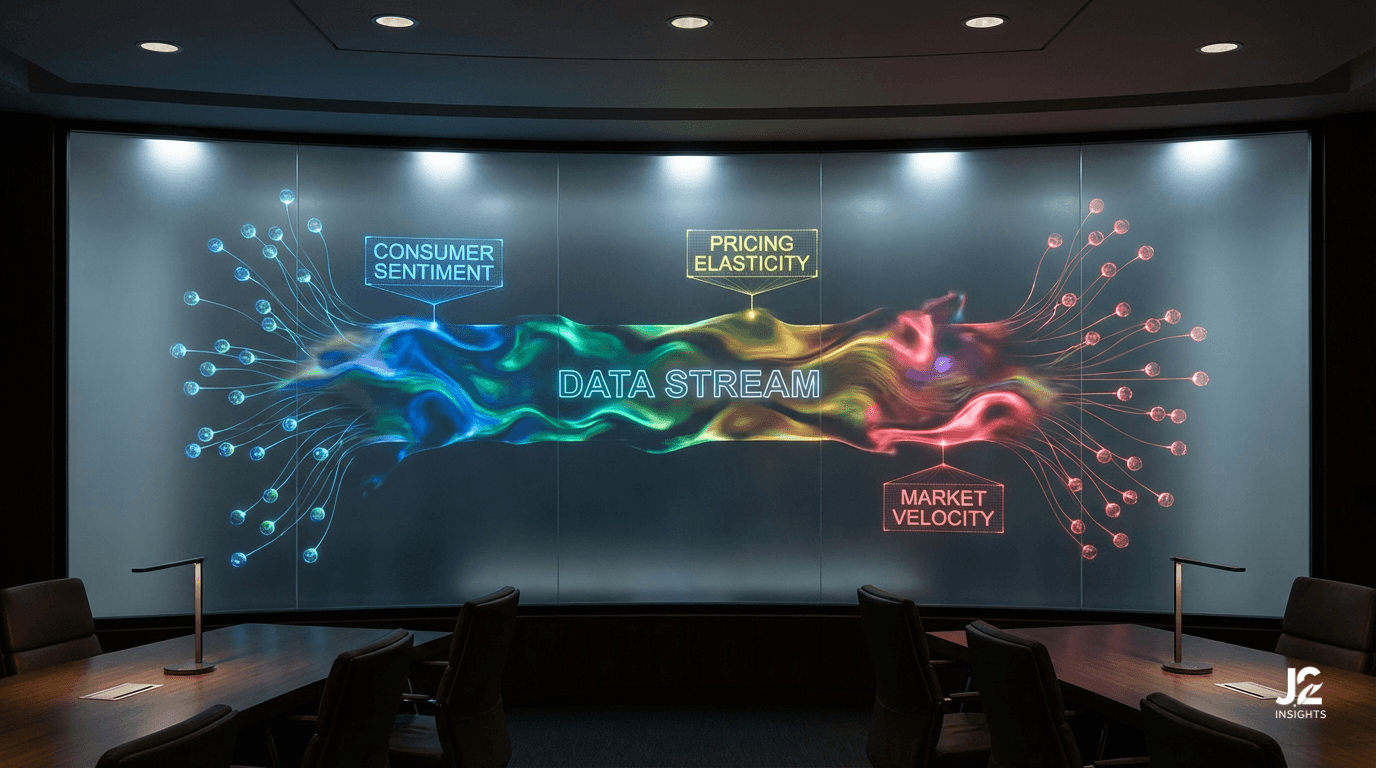
Leading organizations are no longer "commissioning studies"; they are building and maintaining Always-On Intelligence Layers. These systems don't treat data as a one-time harvest. Instead, they blend a constant stream of survey data, behavioral signals, transaction logs, and external macroeconomic indicators into a single, living ecosystem.
According to ESOMAR’s 2025 Global Trends Report, companies that have transitioned to continuous insight approaches report a significantly faster alignment between insight and action. They aren't waiting for the "Quarterly Report" to tell them that customer sentiment has shifted in the Northeast; they are seeing the signal move in real-time.
The Commercial Advantage of Timing
The strategic shift here is a move from "Retrospective Analysis" to "Situational Awareness." In a volatile market, the primary commercial advantage isn't just having better data—it’s having it earlier than the competition. Continuous systems allow teams to move with surgical precision in three key areas:
Early Detection of Sentiment Inflections: In industries like Automotive, where EV sentiment can be swayed by a single regulatory change or infrastructure headline, waiting for a monthly tracker is too slow. Continuous systems detect the "vibe shift" as it happens, allowing for immediate messaging pivots.
Live Demand Elasticity Monitoring: As inflation and interest rates fluctuate, a consumer's "willingness to pay" isn't a static number. Continuous insight allows Pricing Committees to monitor how demand responds to price changes across different regions and demographics in real-time, rather than relying on historical averages.
Identification of "Ghost Segments": One-off studies often miss emerging sub-cultures. Continuous systems excel at identifying "emerging segments"—groups of consumers with latent potential—before they are large enough to be captured by traditional, broad-brush research.
The New Role of the Researcher: System Architect
This transition fundamentally changes what it means to be a "researcher." The value is no longer in the "craft" of writing a single survey; it is in the architecture of the signal ecosystem. At J2 Insights, we believe the one-off study hasn't lost its value, but its location has changed. It is no longer the main event; it is now a diagnostic tool nested inside the broader continuous system to "double-click" on a specific signal that the AI has flagged.
Market research is evolving from an "output business" (producing reports) to an "uptime business" (maintaining intelligence). AI provides the scale to monitor millions of data points, but human judgment—the "Strategic Inversion" we specialize in—determines the relevance of those signals to the P&L.
The Risk of Stale Insight
Organizations that continue to rely on the episodic project model are essentially flying a plane with a radar that only refreshes every twenty minutes. By the time you see the mountain, it's already too late. In 2026, the competitive moat is built on low-latency intelligence. Those who cling to static studies are not just acting on old data—they are acting on a reality that no longer exists.